











Explore Shimonoseki -Japan’s renowned “Fugu Capital.” If you’re a curious, adventurous foodie seeking a truly memorable taste of Japanese tradition, its legendary blowfish (fugu), expertly prepared by certified chefs, awaits -especially in winter, when the fish is at its peak.

A Fish Known as ‘Luck’
Here’s a fun fact to start: in the local dialect, fugu is pronounced ‘fuku’, which is the same word for “good luck” (福). This auspicious connection adds a layer of cultural charm to this famous dish. And while tasting it might feel like a leap of faith, it’s a gastronomic journey you won’t regret.

Why Shimonoseki is the Epicenter of Fugu
Shimonoseki’s reputation is built on fugu. The fish, which contains a potent neurotoxin, thrives in the waters surrounding the city. For centuries, this has made Shimonoseki the number one hub for fugu processing in Japan, handling a massive percentage of the nation’s entire catch. The city is home to the Haedomari Market, the only market in Japan that specializes exclusively in fugu. It’s here that the fish are expertly processed to earn the coveted “Shimonoseki Fugu” brand designation -a mark of the highest quality and safety.

The Path to Legalizing Fugu
Ancient to Medieval
Archaeological finds show pufferfish were eaten in Japan as early as the Jomon period. Because poison incidents were common, many regions enforced “fugu bans” and strict controls.
Late 16th-century Prohibitions
According to tradition, Toyotomi Hideyoshi issued a nationwide prohibition after poisoning incidents among his troops. Throughout the Edo period, numerous domains maintained their own bans, sometimes with severe penalties for violations.
Meiji Turning Point (Shimonoseki and Shunpanro)
In 1888, Prime Minister Ito Hirobumi tasted expertly prepared, safely handled fugu at the Shunpanro restaurant in Shimonoseki and was deeply impressed. This catalyzed the relaxation of the ban in Yamaguchi Prefecture, allowing fugu to be served under proper techniques and controls. It is widely cited as the symbolic revival of Shimonoseki’s fugu culture. Shunpanro later hosted the negotiations for the Treaty of Shimonoseki (1895), further elevating the city’s -and fugu’s- profile at home and abroad.
Modern Regulation
After World War II, Japan’s Food Sanitation Act (1947) provided the legal foundation for safety. Prefectures and municipalities established licensing systems, exams, training, and hygiene standards, permitting only certified chefs to serve fugu. Shimonoseki built specialized market, processing, and distribution infrastructure, creating a tightly controlled nationwide supply chain.
Today
Thanks to strict licensing and regulated distribution, fugu has evolved from a once-prohibited food into a safely enjoyed, year-round culinary tradition. Note: These points reflect commonly cited historical accounts; the scope and timing of bans and their relaxation varied by region.

Is it Safe The Art of a Licensed Chef
The question on everyone’s mind: is it dangerous? While wild fugu is famously poisonous, you are in the safest hands in Shimonoseki. In Japan, the preparation of fugu is strictly regulated. Only highly skilled, licensed chefs who have undergone years of rigorous training are legally allowed to clean and serve the fish, meticulously removing every trace of toxin. Eating fugu at a registered restaurant is an exceptionally safe and regulated experience.
The Ultimate Fugu Experience: A Full-Course Meal
While you can order dishes a la carte, the best way to experience fugu is through a full-course meal. Though menus vary, a typical feast includes:
Fugu Sashimi:
The star of the show. The fish is sliced paper-thin and exquisitely arranged on a platter, often in the shape of a chrysanthemum flower. Its flavor is subtle and elegant, with a unique, slightly chewy texture. Instead of soy sauce, you’ll dip it in a tangy ponzu (citrus and soy) sauce to enhance its delicate taste.
Fried Fugu (Fugu Karaage):
Crispy on the outside and juicy on the inside, this deep-fried fugu is often compared to high-quality chicken and is incredibly delicious.
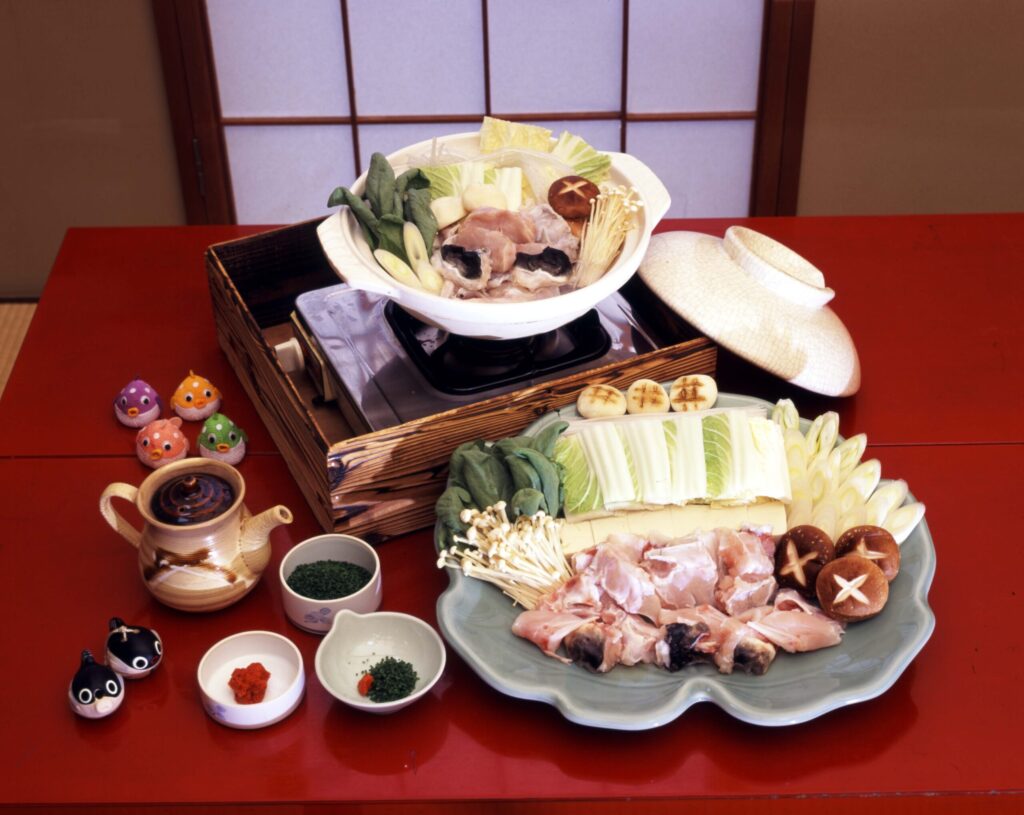
Fugu Hot Pot:
A comforting and savory hot pot where pieces of fugu are simmered with fresh vegetables. It’s a perfect dish to warm you up.
Rice Porridge (Zosui):
To finish the hot pot, rice is added to the remaining broth. This porridge absorbs all the rich, umami-filled flavors from the fish and vegetables, creating a deeply satisfying final course.
Hirezake:
For a truly unique experience, try this hot sake which has a grilled fugu fin in it. The fin infuses the sake with a smoky, savory aroma that is unforgettable.

Enjoy Fugu All Year Round
While the traditional fugu season is in the winter when the fish is said to be at its best, Shimonoseki’s expertise and advanced fishing industry mean you can safely enjoy this delicacy year-round. So, when you visit Shimonoseki, be brave and dive into the world of fugu. It’s more than just a meal -it’s a taste of Japanese craftsmanship, tradition, and a little bit of “fuku” (luck).

How to Get to Shimonoseki
By Bullet Train (Shinkansen)
Best for Japan Rail Pass holders!
Destination Station: Shin-Shimonoseki Station (新下関駅)
From Fukuoka (Hakata Station): approx. 30 min
From Hiroshima: approx. 30 min
From Osaka / Kyoto: approx. 2 – 2.5 hours
From Tokyo: approx. 4.5 – 5 hours
JR Pass Note: The fastest trains (Nozomi/Mizuho) are not covered. Use Hikari or Sakura trains.
By Air
Fukuoka Airport (FUK) – Most Convenient for International Flights
Take the subway to Hakata Station (5 min).
Transfer to the Shinkansen for Shin-Shimonoseki Station (30 min).
Yamaguchi Ube Airport (UBJ) – Closest Airport
Take the direct airport bus to Shimonoseki Station (approx. 75 min).
Kitakyushu Airport (KKJ) – Across the Strait
Take the direct airport bus to Shimonoseki Station (approx. 60 min).
Getting to the City Center (Karato Market area)
The Shinkansen arrives at Shin-Shimonoseki Station. The main downtown area is around Shimonoseki Station.
From Shin-Shimonoseki Station:
Take a local JR train to Shimonoseki Station (10 min ride).
Buses are also available to go directly to the Karato Market area.

More about Shimonoseki
Official Sightseeing Guide: https://shimonoseki.travel/multilingual/
Facebook: https://www.facebook.com/100064960113172
Instagram: https://instagram.com/visit_shimonoseki_japan