











On August 22 and 23, 2026, central Okayama fills for Ura, the dance festival at the heart of the Okayama Momotaro Festival. Teams in bold ogre face paint dance through the city streets over two days, drawing crowds of around 400,000. It has run since 1994, which makes it young by Japanese standards – and its premise is unusual enough to explain why it caught on.
WHAT MAKES IT WORTH SEEING
Momotaro, the Peach Boy, is one of the best-known folk tales in Japan: a boy born from a peach who sails to an island and defeats the ogres. Okayama claims the story, and the local version has a specific historical shape – the hero is identified with Prince Kibitsuhiko, and the ogre he defeats is Ura, a figure said to have ruled from a mountain fortress in this region. The festival is named after the ogre, not the prince.
That choice is the whole character of the event. Dancers paint their faces in the ogre’s markings and dance as Ura – the defeated party, the outsider, the one the standard children’s version treats as simply evil. For visitors who know Momotaro as a straightforward good-versus-evil tale, watching a whole city spend two days celebrating the ogre is a genuinely different reading of a story they thought they knew.
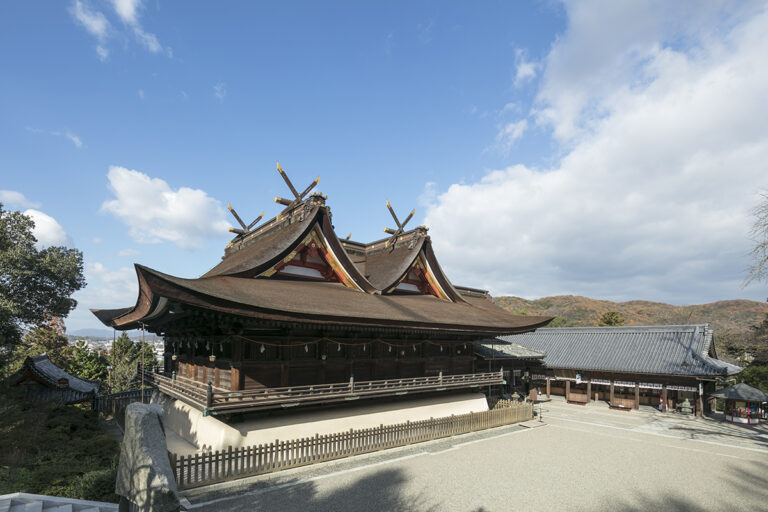
The festival’s name comes from Ura. The legend behind it is worth knowing before you go. Ura is described as a figure who came from outside – in some tellings from the continent – and settled at Kinojo, the ogre’s castle, on a hill west of the city. He is credited with bringing iron-working to the region. The court sent Kibitsuhiko to subdue him, and the fight between them is the source of several place names still on the map here. Whether Ura was a monster or simply the losing side of a takeover is exactly the question the festival leaves open.
THE FINALE IS THE POINT
The single defining feature of Uraja comes at the end. From 19:30 on the second day, for about an hour, everyone dances the So-odori – the all-in dance – performed to return the spirit of Ura to the heavens. Dancers, spectators and the backstage crew all join it, and the distinction between performer and audience disappears. A So-odori on this scale has no parallel at any other festival in Japan, and it is the part that holds people.
If you can only be there for one part of the two days, be there for this. It is also the moment when a visitor stops watching and starts taking part – no rehearsal, no costume and no Japanese required.
WHAT TO EXPECT ON THE STREET
Expect noise, colour and crowds rather than ceremony. Teams perform in sequence along set stretches of the central streets, so you do not need to follow anything – stand in one place and the festival comes past you. The face paint is the thing to look at up close: each team designs its own kumadori markings, and no two are alike. Photography is unrestricted along the public route.
HOW TO ATTEND
Free to watch. The dance runs through the central streets of Okayama over both days as part of the wider Okayama Momotaro Festival. No ticket or reservation is required; find a spot along the route.
| Dates | August 22-23, 2026 |
|---|---|
| Venue | Central Okayama City |
| Attendance | Around 400,000 |
| Held since | 1994 |
| Finale | So-odori, from 19:30 on the second day, for about an hour – dancers, spectators and crew dance together to return Ura’s spirit to the heavens |
| Admission | Free to watch |
| Official Info | uraja.jp |
THE REST OF THE MOMOTARO FESTIVAL
Uraja is the centrepiece of the wider Okayama Momotaro Festival. The festival also has an autumn and a winter edition. The autumn one, in October, is built around food – the specialities of the prefecture’s towns and its regional cooking.
GETTING THERE
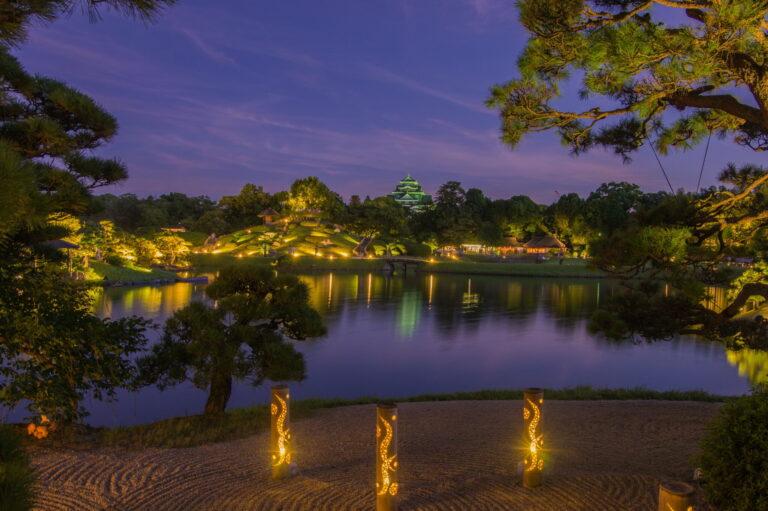
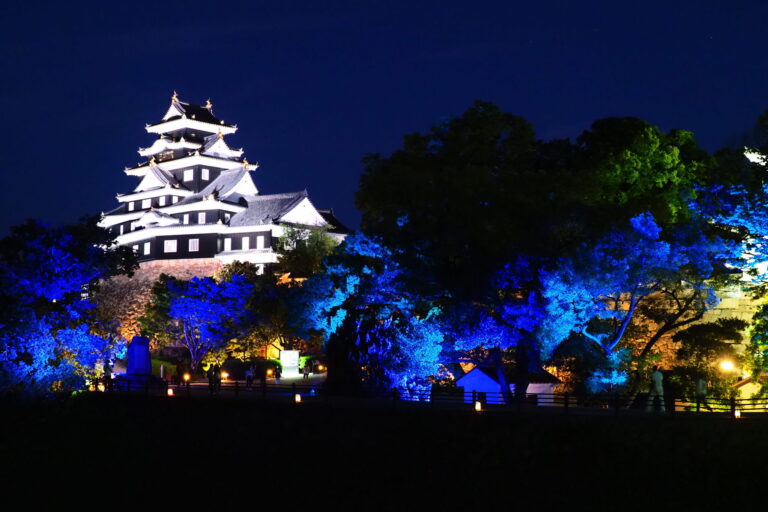
Okayama is a Sanyo Shinkansen stop between Osaka and Hiroshima, about 45 minutes from Shin-Osaka, and it is also the junction for trains to Shikoku and to the San’in coast – which makes it one of the most useful bases on a western Japan route. Korakuen, ranked among Japan’s Three Great Gardens, and Okayama Castle face each other across the river a short tram ride from the station, and the Kibiji district where the Ura legend is set lies just west of the city. If you have a day to spare after the festival, a separate loop bus service to Kibiji – covering Kinojo and Kibitsu Shrine – starts running on August 29, just after Uraja ends.
Source: Okayama City #WestGoldenRoute #Okayama #Momotaro #Uraja #Nukumori