












Japanese culture is shaped by values and ways of thinking that differ from those found in Europe, America, and Australia.
These perspectives are interwoven in the country’s manga and anime, cuisine, cities, and landscapes—and can be felt even in popular destinations such as Tokyo and Kyoto. However, if you are interested in exploring a lesser-known side of Japan and wish to connect with the roots of its cultural spirit, we invite you to look toward Western Japan.
In this article, a writer deeply familiar with Japan’s culture and traditions will guide you to the entrance of this rich and fascinating world.
A Gateway to the Spiritual World of Japanese Culture
The foundation of Japan’s daily customs is the animistic belief that “all things are inhabited by spirits.” These spirits are thought to dwell not only in natural elements, such as mountains, water, ancient trees, and massive stones, but also in man-made objects like hearths and homes. Animals such as foxes, snakes, and wolves have also been regarded as messengers of the gods or even as deities themselves.
While animistic beliefs can be found in many cultures around the world, in Japan they remain deeply woven into everyday life. Even in modern times, when traditional customs may seem distant, people continue to live, often unconsciously, under the influence of these age-old spiritual values.
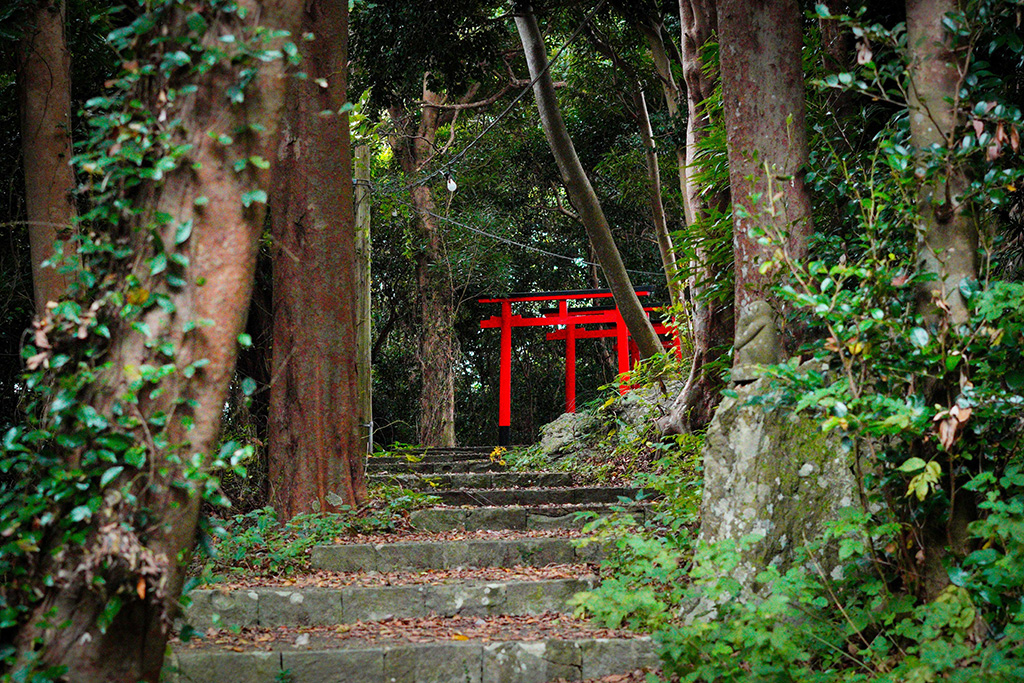
As you walk through towns and cities, you will find Shinto shrines and Buddhist temples everywhere, as well as weathered Jizo statues and Dosojin, guardian deities placed along roadsides, mountain passes, and village boundaries to protect against disease and evil spirits.
Some of these stone figures serve as protectors of local communities, and even today, many young Japanese people still feel, deep down, that showing disrespect to them may bring bachi—misfortune or punishment. When you travel through Japan with an understanding of this quiet but enduring faith, you begin to sense the depth and uniqueness of this country.
From here, the journey is divided into four themes, each introducing experiences and places where you can encounter the spiritual origins of Japanese culture and the landscapes that shaped them. If you venture into Western Japan, you are sure to discover a side of the country that remains largely unseen by most travelers from around the world.
Everyday Sensibilities in Japanese Culture and the Spirit of Matsuri

Japanese life is traditionally divided into two contrasting states: hare, which refers to special, non-everyday occasions such as annual festivals and life rituals (including childbirth and marriage), and ke, which represents ordinary daily life.
On days of hare, people dress in special clothing and enjoy celebratory meals. These moments of hare bring rhythm and contrast to everyday life, helping people endure and move through the long cycle of the year.
The clearest symbol of hare is the matsuri, or festival, held in countless forms across Japan. Originally, festivals were sacred rites to honor gods, Buddhas, and ancestral spirits. Today, however, they have diversified and many have been modernized for visitors. Yet, in Western Japan especially, a wide variety of vibrant festivals still carry this deep cultural meaning.

One of Kyushu’s most iconic festivals is Hakata Gion Yamakasa, held every July in Fukuoka City, Fukuoka Prefecture. This sacred event centers on the dedication of enormous, elaborately decorated floats known as yamakasa to Kushida Shrine, the guardian shrine of Hakata, a popular ward in Fukuoka City. Each year, the festival draws around three million visitors.
Fukuoka is also home to Hakata Dontaku, held every May. Its origins trace back to the folk celebration Hakata Matsubayashi, which is an over 800-year-old tradition. Together, Hakata Gion Yamakasa and Hakata Dontaku are deeply intertwined with the identity and pride of the people of Hakata.

A wide variety of festivals are also held in the Sanyo region along the Seto Inland Sea. One of the most famous ones is Saidaiji Eyo, a traditional event that takes place at Saidaiji Temple in Okayama City, Okayama Prefecture.
Also known as the “Naked Man Festival,” this ritual sees thousands of men, wearing only traditional loincloths, fiercely competing to seize sacred wooden sticks called shingi. The sight of more than 10,000 participants crashing into one another is truly captivating.

During festivals, special foods are often offered to the gods. By sharing these sacred offerings, people believe they can take in the gods’ spiritual power.
The Kyushu specialty fugu (pufferfish) has also long been eaten on celebratory and special occasions. In particular, in Shimonoseki, Yamaguchi Prefecture, fugu is affectionately called fuku, a homonym meaning “good fortune,” and is cherished by the local community as a symbol of luck and prosperity.
Reverence for Mountains and Seas: The Faith That Shapes Japan

Japanese people have long sensed a special energy in awe-inspiring sacred mountains and ancient trees, feeling both fear and reverence toward the transcendent spiritual power believed to dwell within them.
At places of worship such as shrines and temples, this animistic sensibility can often be seen in the form of sacred trees (goshinboku). There are also many shrines, such as Omiwa Shrine in Nara Prefecture, that enshrine an entire mountain as their sacred object of worship.

Surrounded by the wave-like rock formations known as Oni no Sentakuita (the Devil’s Washboard) lies Aoshima, a small island with a circumference of about 1.5 kilometers, located in Miyazaki City, Miyazaki Prefecture. At its center stands Aoshima Shrine, a popular spot where visitors can experience both abundant nature and deep-rooted local faith.
In the past, the island was closed to the general public except on festival days, and while this is no longer the case, it still retains a solemn, sacred atmosphere.

One of Japan’s most photogenic shrines is Itsukushima Shrine, located on Itsukushima Island (commonly known as Miyajima), floating in Hiroshima Bay. The entire island is considered sacred, and for centuries it has been revered as the dwelling place of deities who protect travelers at sea.
The sight of the shrine’s magnificent vermilion torii gate rising from the water just offshore is breathtaking.

Sanbutsu-ji, a Buddhist temple in Misasa Town, Tottori Prefecture, is built into a sheer cliff face. The mountain on which it stands, Mount Mitoku, is a sacred peak of Shugendo, a Japanese mountain religion rooted in ancient nature worship.
A visit to this site offers a powerful sense of the deep faith people have held toward the harsh forces of nature.
The Philosophy of Space: Seeking Harmony Between Nature and Daily Life

For centuries, Japanese people have created spaces where nature and human-made structures exist in harmony. From gardens and castles to parks, these environments reflect a distinctly Japanese philosophy and aesthetic toward living spaces and the world around them.
You may have heard the term wabi-sabi—a uniquely Japanese sense of beauty that finds elegance in imperfection and invites quiet appreciation of stillness, empty space, and the gentle passage of nature.

Rising from the mountains of Takahashi, Okayama Prefecture, Bitchu Matsuyama Castle is the only remaining mountain castle in Japan with its original keep still intact. Under the right seasonal and weather conditions, the castle appears to float above a sea of clouds, earning it the nickname “the Castle in the Sky.”

Suizenji Jojuen Garden in Kumamoto City, Kumamoto Prefecture, covers an area of approximately 73,000 square meters. The garden features artificial hills that recreate famous scenic landscapes such as Mount Fuji and the Tokaido—an ancient road that connected Kyoto and Edo (modern-day Tokyo)—allowing visitors to appreciate the refined techniques and craftsmanship of traditional Japanese garden design.

This awareness of creating spaces where nature and human structures exist in harmony can also be seen in Japan’s urban landscapes.
The night view of Nagasaki City, Nagasaki Prefecture has been selected as one of the World’s New Top Three Night View Cities, alongside Monaco and Shanghai. Built across a bowl-shaped valley, the city spreads between mountains and the sea. From the Inasayama Observatory, visitors can take in a spectacular panorama where ocean, hills, and urban lights coexist in perfect balance.
The Relationship Between Hot Springs and Japanese Culture
Japan is one of the world’s great hot spring nations, with an estimated 3,000 onsen resorts across the country, drawing visitors from both Japan and abroad.
Before the development of modern medicine, hot spring towns also served as places of healing. Some onsen are linked to ancient myths and legends, and in certain regions you can even find shrines dedicated to onsen deities. Understanding this cultural background allows you to appreciate Japan’s hot springs on a much deeper level.

Yufuin Onsen, in Yufu, Oita Prefecture, is one of Kyushu’s most celebrated hot spring resorts. It spreads across a basin surrounded by mountains rising over 1,000 meters and boasts the second-largest volume of hot spring water in Japan.
Towering above the town is Mount Yufu (1,583 meters), an active volcano and the symbol of Yufuin. Since ancient times, it has been revered as an object of worship, and the surrounding area is dotted with sites of mountain faith, including Bussan-ji Temple.

Rivaling Yufuin as one of Oita Prefecture’s most famous destinations, Beppu Onsen is Japan’s number one hot spring area in both the number of sources and volume of water produced.
This extraordinary natural abundance offers far more than just bathing. The surreal landscapes stained in cobalt blue and vivid red are known as the “Hells of Beppu” (Beppu Jigoku) and have been designated as a National Place of Scenic Beauty. Walking through the city with the greatest hot spring output in Japan and experiencing its uniquely colored springs through all five senses in the Beppu Jigoku Meguri (Hell Tour) is truly a one-of-a-kind cultural deep-dive.

Arima Onsen in Kobe, Hyogo Prefecture, is one of the Kansai region’s most renowned hot spring towns. With a history stretching back to ancient times, it is home to temples and shrines such as Onsen-ji Temple and Tosen Shrine, whose names reflect the deep cultural ties between the springs and spiritual life. It is said that people have been visiting Arima since antiquity.
At Arima, you can enjoy two contrasting types of hot spring waters: the brown-hued Kinsen (Gold Spring) and the clear, colorless Ginsen (Silver Spring).

Dogo Onsen in Matsuyama, Ehime Prefecture, is one of Japan’s Three Ancient Hot Springs, with a history dating back over a thousand years. At the heart of the area stands Dogo Onsen Honkan, a public bathhouse with more than 100 years of history and stately architecture that leaves a powerful impression on all who visit.
Discover the Hidden Depths of Japanese Culture with a Journey through Western Japan
The Golden Route of Western Japan offers curated courses focused on cultural experiences. If you’d like to explore the theme of hot springs and culture, the Kansai–Shikoku–San’in Route is ideal. If you prefer hot springs and nature, then we highly recommend the Kyushu Route.
Unforgettable Model Courses in Western Japan
Inspiring Model Courses in Kyushu
By traveling with an understanding of Japanese faith and customs, you can experience the country on a deeper level. Visit the many regions of Western Japan and explore a side of Japan that you have yet to know.
Local government resources
Kobe City
Himeji City
Tottori Prefecture
Okayama Prefecture
Okayama City
Hiroshima Prefecture
Shimonoseki City
Takamatsu City
Matsuyama City
Kitakyushu City
Fukuoka City
Takeo City
Nagasaki City
Iki City
Beppu City
Yufu City
Kumamoto City
Miyazaki City
Kagoshima City