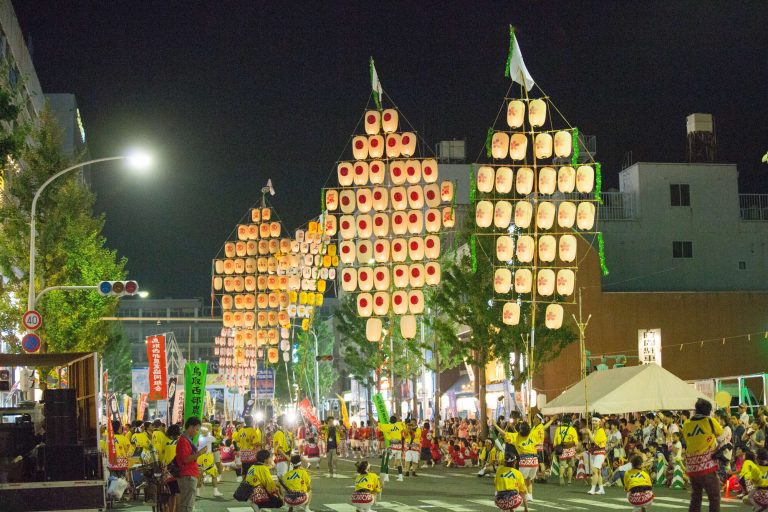











The Utsubuki Festival is held over the first weekend of August in Kurayoshi, in central Tottori. In 2026 it ran on 1 and 2 August, the 48th edition. The first evening belongs to the streets of the old town centre; the second to fireworks by the river. It is free to watch, with no paid seating of any kind – a small-city festival, run by a committee based in the city hall, and one of the few occasions when the area around Kurayoshi's preserved merchant quarter is full of people after dark.
The Name Comes From A Story
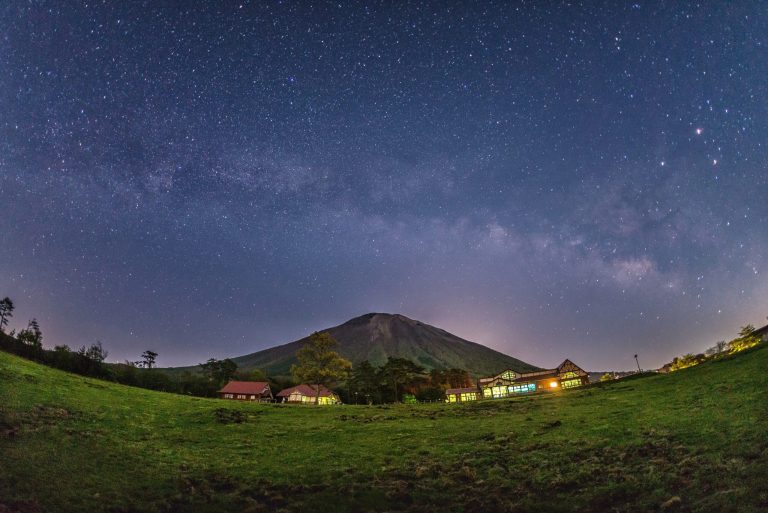
The festival takes its name from Mt. Utsubuki, the wooded hill rising directly behind the town, and from the story attached to it: a woman brought here from the imperial capital is said to have climbed the hill and, in her longing for home, struck drums and played flutes toward Kyoto – utsu, to strike, and fuku, to blow. A castle stood on that hill from the Muromachi period, and the town formed at its foot.
The Dance, And How It Was Recovered
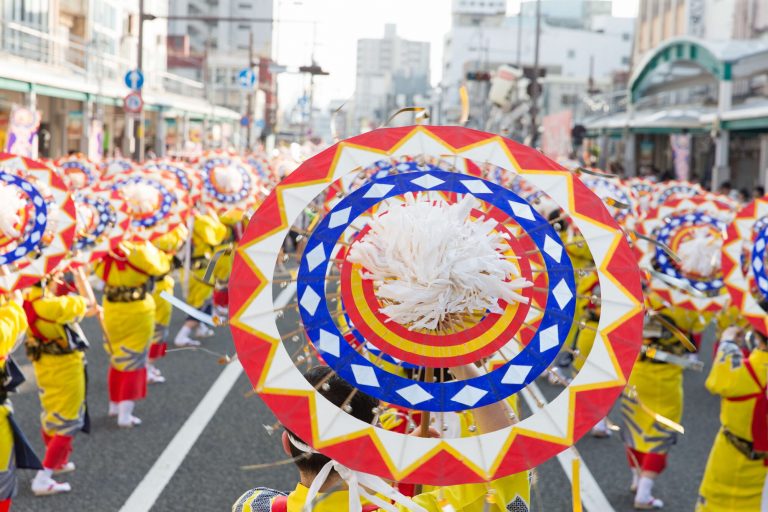
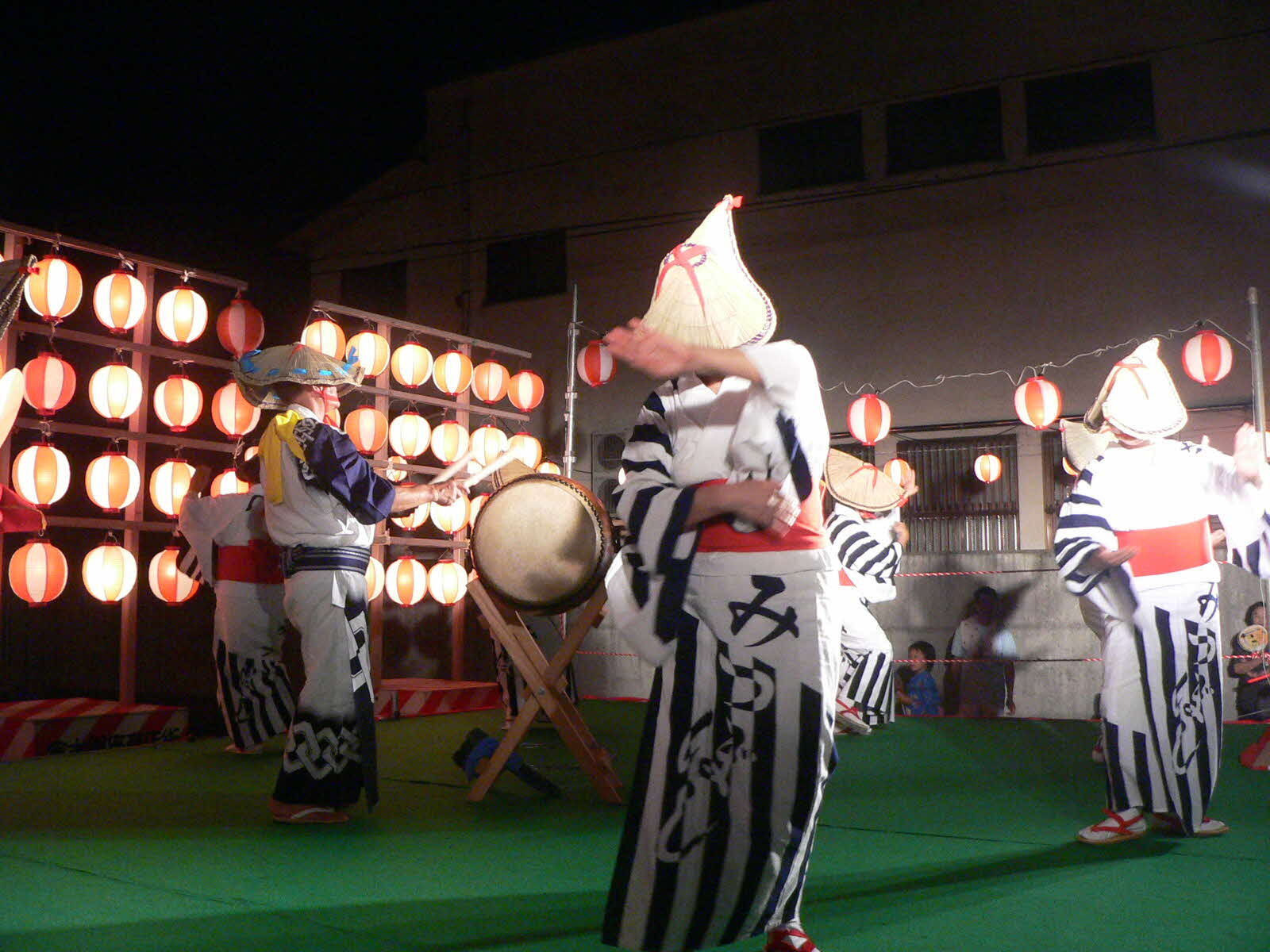
The centrepiece of the first evening is the Mitsuboshi Odori, danced along Kurayoshi Ginza-dori from 18:00. It exists in two forms, and the distinction is worth understanding.
The wa-odori – the circle dance – is the old one: Fukumitsu Mitsuboshi Odori, designated an intangible folk cultural property by the city. The marching version most visitors will see is younger and was deliberately constructed. In 1965 the Kurayoshi Cultural Properties Association went out and surveyed the songs and dances that survived in scattered form across the district, reconstructed them, and then rearranged the result into a form that could be danced moving down a street. Local groups have carried it since, coached by the city's folk dance association.
The rules of the competition tell you what the dance is supposed to be. Teams need at least ten people. Judging is on the beauty of the movement, the unity of the group and the energy of it. And critically: no instruments, and nothing held in the hands. Strip away the props and what is left has to carry itself – which is a demanding standard, and the reason the massed effect is as clean as it is. Teams dancing in yukata have their cleaning costs covered by the organisers, a small detail that says a lot about how the town runs this.
The rest of the first evening fills in around it, from 16:00: an opening with Utsubuki drums, the announcement of the year's Utsubuki Tennyo, and a mochi-throwing; a women's portable shrine and an ushi-oni; a children' s bayashi parade; and the Kurayoshi Utsubuki taiko. Food stalls run through the evening.
The Second Evening
The second day moves out of the old centre to Hiten-mu Plaza in Minichi-cho – the riverside by the Kurayoshi Ohashi bridge – from 17:00 to 21:00, with a market, a summer music programme, and the Hiten fireworks, about 4,000 shells over the river. It is a different kind of evening from the first: less about watching a tradition and more about a town having a party at the water's edge. No booking is needed for either night, and the two v venues are within walking distance of each other.
The Town Is The Other Reason To Come
Kurayoshi Ginza-dori, where the dancing happens, sits immediately beside the Utsubuki-Tamagawa Preservation District – about 9.2 hectares of merchant town that the national government has designated an Important Preservation District for Groups of Traditional Buildings, one of only around 129 such districts in Japan and one of three in Tottori Prefecture. The buildings run along Honmachi-dori and the Tamagawa canal – white-walled storehouses under red roof tiles, the combination the town is known for.
The layers underneath are deep. This area held the provincial capital of Hoki in ancient times. In the Edo period it was the jinya town of the Arao family, senior retainers of the Tottori domain. From the late Edo period into the Taisho era it grew wealthy on cotton and on ineko-senba, the toothed threshing implement made here and sold across the country. The storehouses you walk past were built on that trade.
Practically, this means an evening festival and a serious daytime walk are within a few minutes of each other – an unusually efficient stop for anyone routing across the San'in coast rather than down the Pacific side.
When First weekend of August. In 2026 it ran on 1-2 August, the 48th edition. Dates for the following year are announced by the organising committee
First evening 16:00-19:15, around Kurayoshi Ginza-dori. Mitsuboshi Odori competition 18:00-19:1 5
Second evening 17:00-21:00, Hiten-mu Plaza (the riverside by the Kurayoshi Ohashi bridge), Minichi-cho. Hiten fireworks, about 4,000 shells
- Admission: Free to watch. No paid seating of any kind. No booking required
- If it rains: Held in light rain; cancelled in heavy weather
The dance Mitsuboshi Odori. Circle-dance form designated an intangible folk cultural property by the city; marching form reconstructed in 1965
Entry rules Teams of ten or more. No instruments, nothing held in the hands. Judged on beauty, unity and energy
- Scale: Reported at around 1,500 dancers in a typical year
Nearby Utsubuki-Tamagawa Preservation District, about 9.2 ha, a nationally designated Important Preservation District for Groups of Traditional Buildings; Utsubuki Park
- Access: JR Kurayoshi Station, then 15 min by bus to Shiyakusho / Utsubuki-koen Iriguchi and 5 min on foot. Second day: 5 min by bus to Sogo Jimusho-mae
- Official Info: city.kurayoshi.lg.jp/matsuri/
For more on what to see and do in Tottori, visit the official Tottori Prefecture tourism website.
Sources: Kurayoshi Utsubuki Festival Executive Committee, Kurayoshi City, Agency for Cultural Affairs, Tottori Prefecture Tourism Federation #WestGoldenRoute #Tottori #Kurayoshi #Nukumori © Tottori Pref.