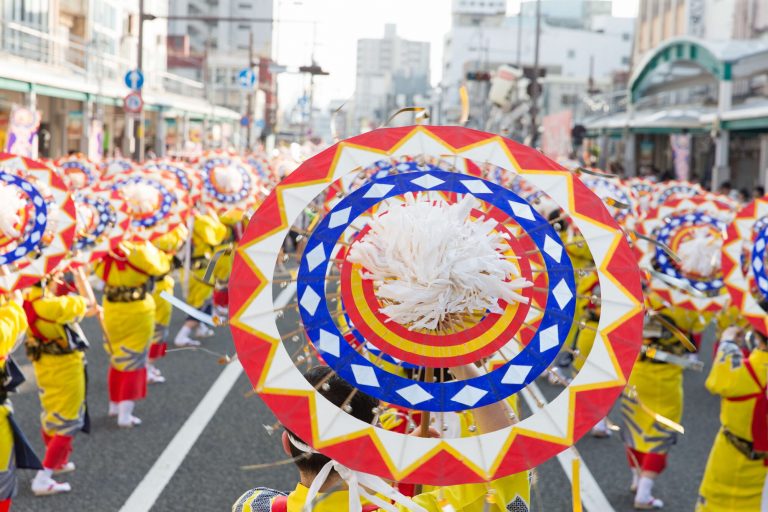











Yonago Gaina Matsuri runs across three days in 2026: an eve festival on 7 August, the main festival on 8 August, and the fireworks on the evening of 9 August, 20:00 to 20:40 at Yonago Port, with about 8,000 shells. This is the 53rd edition, and it is the largest summer festival in western Tottori. Gaina is the local dialect word for big – the Yonago Tourism Association glosses it as large, the prefecture as large or tremendous – and it was chosen as the name because it describes the ambition rather than the town.
The Lantern Poles, And Where They Came From
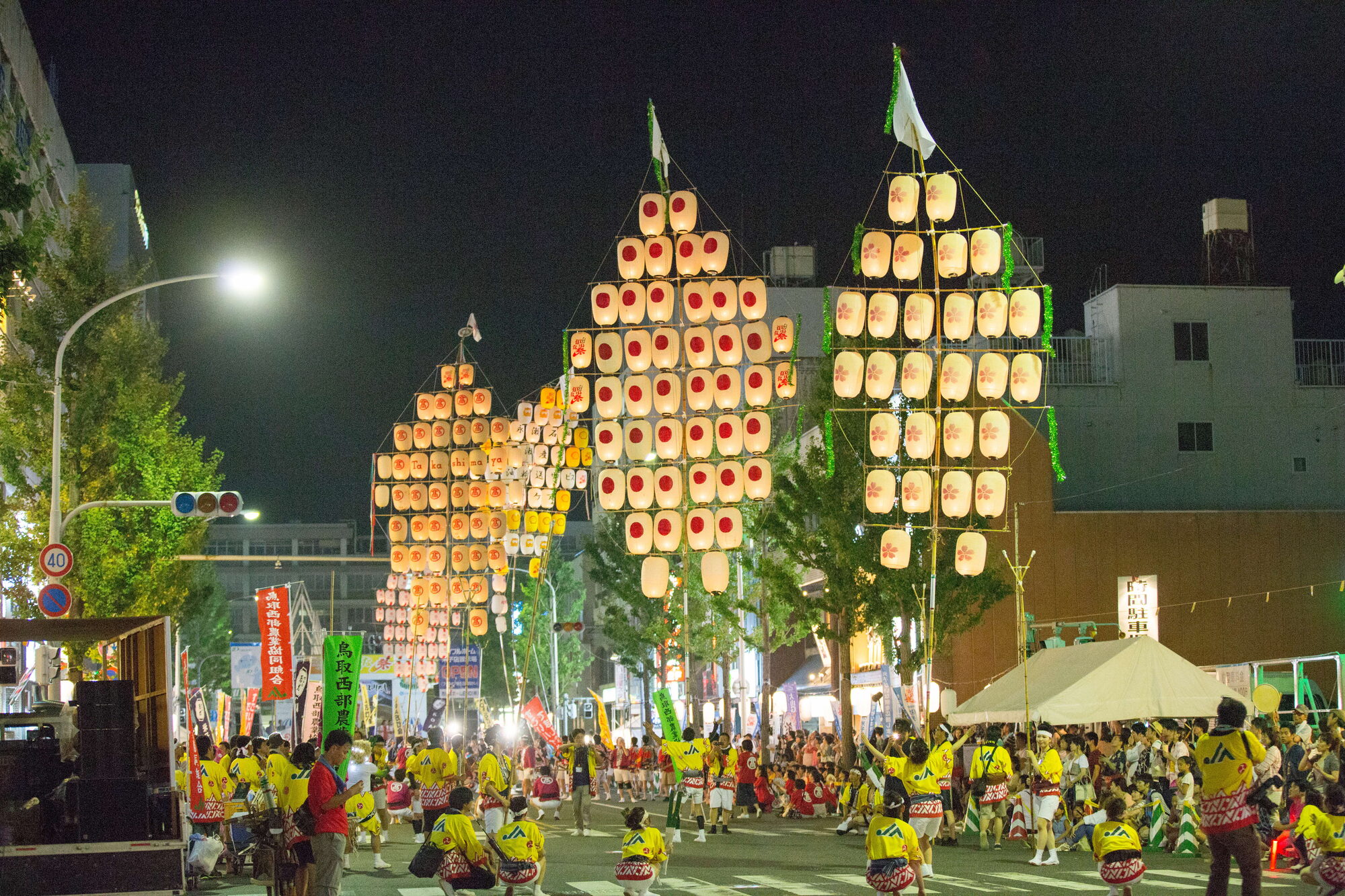
The signature image of the festival is gaina manto: tall poles hung with rows of lanterns, balanced upright by a single person on the palm, the hip, the shoulder or the forehead while walking. It is a discipline of balance rather than speed, and crowds close in because you have to be near it to see the correction happening.
Yonago did not inherit this. In March 1986, a handful of representatives travelled to the Ground Self-Defense Force garrison in Akita, in the far north of Honshu, to learn the Akita Kanto – one of Japan's best-known lantern-pole traditions – and brought the technique back. It has been developed locally since and is now counted a mong Yonago's own folk arts, with its own promotion association; 2025 marked forty years since it began. Th e mass manto performance starts at 18:20 on the main festival day, on the road in front of the station.
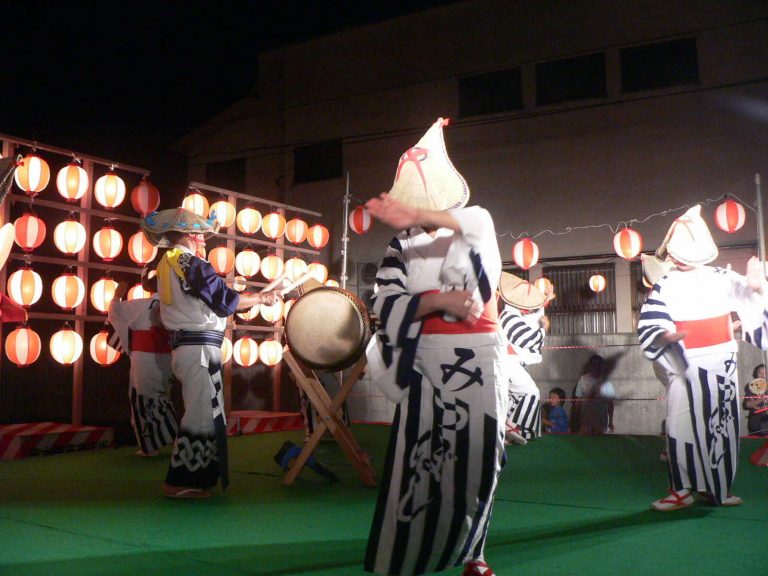
The drums have a similar story. When the festival was founded in 1974, one of its programmes was a showcase of well-known taiko groups from around the country. A performer at that showcase – Sen Amano, from Kofu in Yamanashi Prefecture, on the other side of Japan – was struck enough by it to compose and teach a repertoire for Yonago. Gaina Daiko made its debut at the eve festival of the second edition and has been played here ever since. Both of the festival's defining acts, in other words, were consciously imported and then made local.
The Fireworks
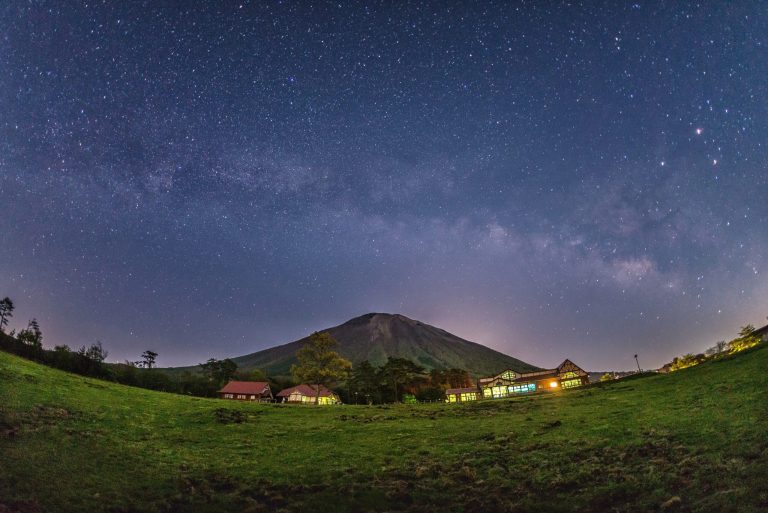
About 8,000 shells go up over forty minutes on the final evening, and this is where the festival's history gets unusual. At the 10th edition Yonago launched a 3-shaku shell – about 90cm in diameter – which the organisers record as the first in western Japan. At the 11th they introduced a Niagara set piece, known locally as the Gainagara. At the 13th they built a set piece 1,711 metres long, matching the height in metres of Mount Daisen, the volcano that dominates the skyline east of the city; it was recognised in the Guinness Book of Records at the time as the longest set-piece firework in the world. From the 21st edition shells have been fired from a barge on Lake Nakaumi, adding the low half-spheres of water fireworks, and from the 34th the port itself has been opened for seating.
Large fireworks in this region are usually staged on open coastline. Yonago's are launched at the port, inside the town, which brings the audience closer to the launch point than is typical and makes the shells feel considerably larger overhead.
How To Attend
The festival itself is free to watch, with no paid seating: the eve festival, the parade, the mass lantern-pole performance and the drum programme are all open to anyone standing in the street. The three days are genuinely different from one another, so decide which you want before booking. The 7th is the eve festival. The 8th is the main day – the parade and the mass lantern-pole performance in the station area, and the drum programme at the Yonago Municipal Culture Hall. The 9th is the fireworks, with a stage programme running alongside from 17:30 at Minatoyama Park before the shells begin.
For the fireworks on the final evening, a limited number of reserved viewing blocks are offered in return for a contribution to the event, in blocks of two metres by two metres – about four adults – with prices from 15,000 yen up to 25,000 yen depending on position and whether parking is included. These are not required: the fireworks can be watched from open areas without a reservation. Contributions are not refunded if the display is cancelled.
One further note: sudden changes in the weather or lightning can cause the programme to be called off or interrupted at short notice. Check the official site on the day.
- Dates: 7 August 2026 (eve), 8 August (main), 9 August (fireworks). 53rd edition
- Fireworks: 9 August, 20:00-20:40, Yonago Port. About 8,000 shells
Main day Parade from 16:50 and mass lantern-pole performance from 18:20 in the station area; drums at Yonago Municipal Culture Hall
Final day Stage programme alongside the fireworks from 17:30 at Minatoyama Park
- Admission: The festival is free to watch, with no paid seating
- Fireworks: seating A limited number of reserved blocks (2m x 2m, about four adults) are offered in return for a contribution, 15,000-25,000 yen. Not required in order to watch. No refund if cancelled
Weather May be cancelled or interrupted at short notice in sudden weather changes or lightning. Check the official site on the day
Name Gaina is Yonago dialect for big or tremendous
- Access: Central Yonago, around JR Yonago Station and Yonago Port
- Official Info: gainamatsuri.net
Why Yonago
Yonago sits between Lake Nakaumi and Mount Daisen, in the western corner of the least-visited prefecture in
Japan, and it functions as the gateway to the Daisen area rather than as a destination that markets itself. Th at is the argument for going: a festival of this scale, in its 53rd year, that has not been rebuilt around foreign v isitors. The dialect in the name is the tell – nobody chose it to be legible from outside.
For more on what to see and do in Tottori, visit the official Tottori Prefecture tourism website.
Sources: Yonago Gaina Matsuri Executive Committee, Yonago City, Yonago Tourism Association, Tottori Prefecture Tourism Federation #WestGoldenRoute #Tottori #Yonago #Nukumori © Tottori Pref.