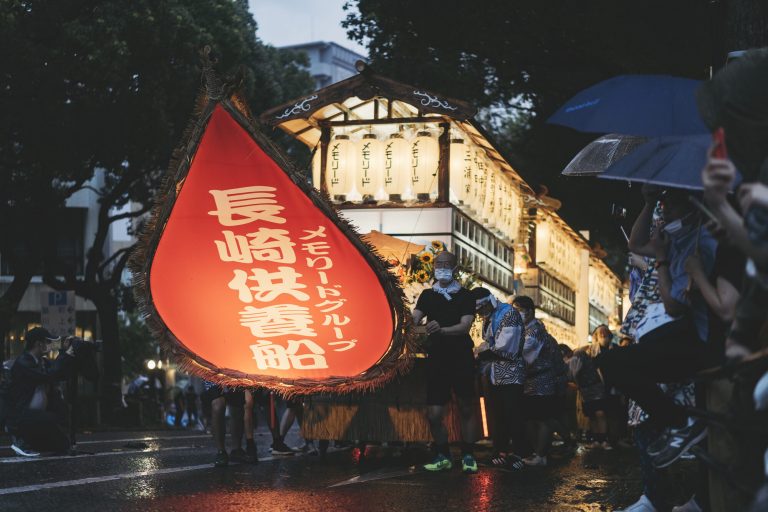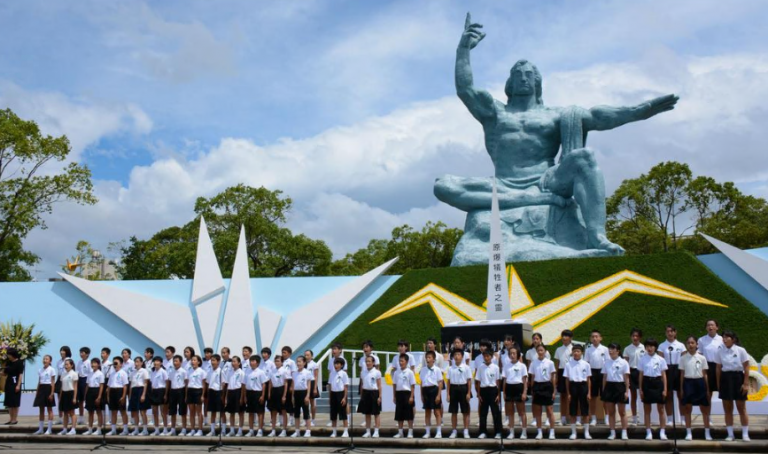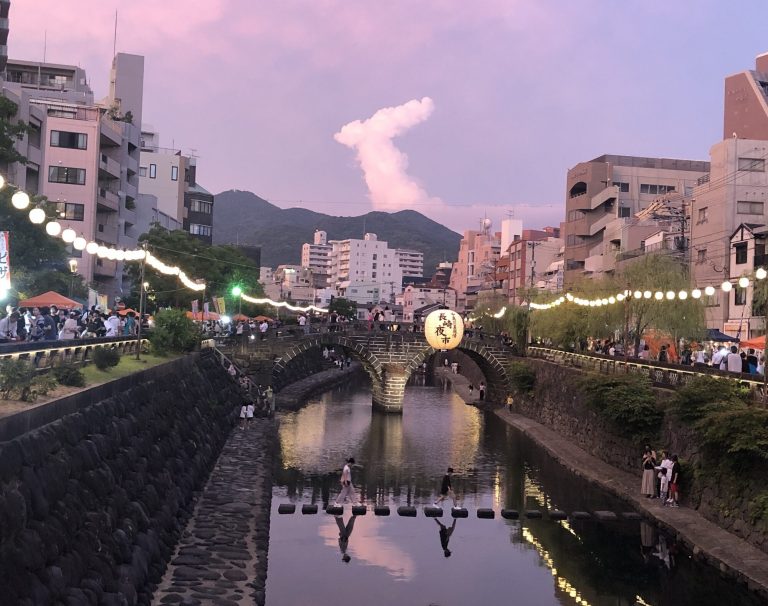











From 7 to 9 October 2026, Nagasaki holds Kunchi, the autumn grand festival of Suwa Shrine, the city's tutelary shrine. It has run since 1634, fills three days, and takes the whole town to stage. The dedicatory dances – the dragon dance, the whale spouting water, and Kokkodesho, in which a float is thrown into the air and caught, among others – are designated an Important Intangible Folk Cultural Property of Japan.
Why It Looks Like Nothing Else
Kunchi is the clearest surviving form of this city's history. For more than two centuries Nagasaki was the only port in Japan open to the West, and it absorbed what came through it into its festival. The dragon dance originates in China and was brought here by the Chinese community that settled in the city. Portuguese and Dutch elements run through the costumes and the music. No other festival looks like this because no other city has this history.
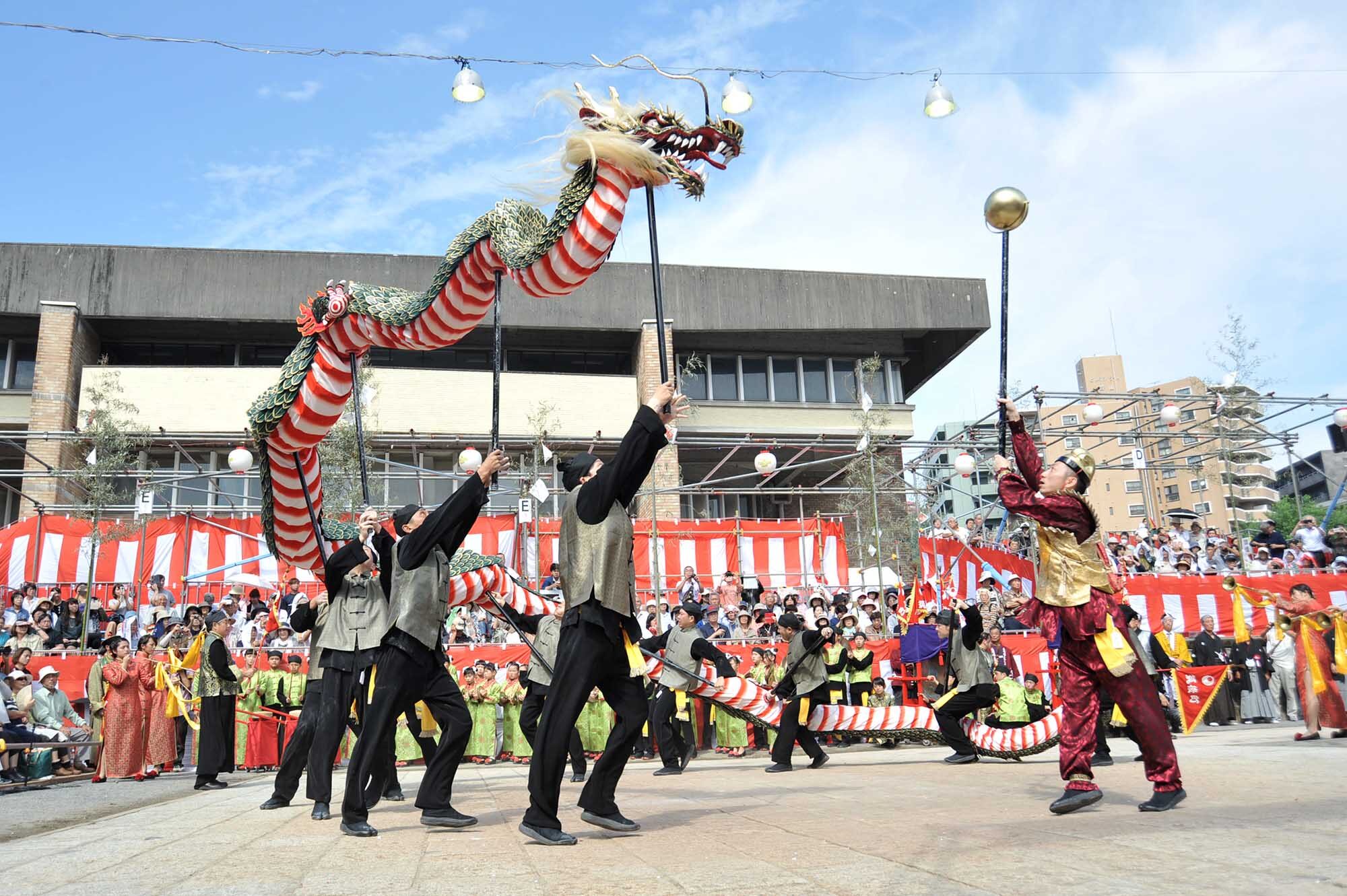
What most visitors come for is the dragon dance. A long dragon, carried on poles, chases a golden orb – undulating, leaping, demanding complete coordination from its handlers. The crowd calls out 'motte-koi' to demand an encore, and the stronger teams answer it. The other set piece is Kokkodesho, in which a heavy decorated float is thrown into the air by a team of men in a single movement and caught on the shoulders. Children's it on top, drumming.
One Thing That Changes How You Plan
The odori-cho – the districts that perform the dedication – rotate. Each district's turn comes round roughly once in seven years. That means the programme changes every year, and residents themselves may wait close t o a decade to see their own district perform. If a particular piece is what you are travelling for, check which di
stricts are performing in 2026 before you book. This is the single most common way visitors are disappointed here, and it is entirely avoidable.
The Festival Is Longer Than Three Days
The three days in October are the visible part of a cycle that runs most of the year. On 1 June the performing districts enter their preparation period with koya-iri, praying for the safe completion of their role. On 3 October the districts display their costumes, props and gifts to the public in their own neighbourhoods – niwamise. On 4 October comes ninzu-zoroi, a full-dress rehearsal performed in the district as if it were the real thing. If y our dates fall just before the festival proper, these are not consolation prizes; they are how residents themsel ves experience the build-up.
During the festival, the dances also travel. Niwasaki-mawari takes the performances to offices, public buildings and private houses across the city, dedicating a dance at each door to share the blessing. This is why you may meet a dragon in an ordinary street with no stands and no tickets.
If You Cannot Get A Seat
Paid seating at the main odori-ba sells out, and for most visitors it will not be an option. This matters less than it sounds. The dances are performed at several sites over the three days, roadside viewing is free, and niwasaki-mawari brings them into ordinary streets where you can stand a few metres from a dragon with no ticket at all. The trade-off is certainty: you see what happens to pass you rather than a fixed programme. Many people who have done both prefer the street.
One more thing about the call. Motte-koi is not applause – it is a demand, shouted in unison, for the performers to come back and do it again. A team that has just carried a dragon at full speed will turn around and do so. Knowing that the crowd holds that power changes how the whole thing feels to watch, and foreign visitors are welcome to join in.
Who Is Performing In 2026
The six towns for 2026 have been confirmed. This is a good year: both of the dances this article is built around – the dragon dance and Kokko-desho – are on the programme, which does not happen every time.
Imakago-machi Kasaboko float and Hon-odori (classical dance)
Aburaya-machi Kasaboko float and Kawafune (river boat)
Motofuna-machi Kasaboko float and Tosen-matsuri (Chinese ship festival)
Uwa-machi Kasaboko float and Uwa-machi Kokko-desho
Kajiya-machi Kasaboko float, Takarabune (treasure ship) and the Seven Lucky Gods
Chikugo-machi Kasaboko float and Ja-odori (dragon dance)
The dragon dance is Chikugo-machi's – the town in the photograph above. Kokko-desho, the palanquin thrown into the air and caught one-handed, belongs to Uwa-machi. Because each town performs roughly once every seven years, the combination on offer in any given year is fixed long in advance, and the organisers publish the rota years ahead. If a particular dance is what you are coming for, you can look up the year it next appears and build the trip around it.
How To Attend
The dedicatory dances are performed at several odori-ba around the city, including Suwa Shrine, and appear in the streets as niwasaki-mawari. Watching from the roadside is free. Paid tiered seating is sold for the main odori-ba but demand is high; if you want a guaranteed view, check availability early.
- Dates: 7 – 9 October 2026
- Main venues: Suwa Shrine and other odori-ba around the city
Highlights The dragon dance; Kokkodesho
Designation Important Intangible Folk Cultural Property of Japan
Note The performing districts rotate, so the programme differs from year to year
Related dates 1 June koya-iri; 3 October niwamise; 4 October ninzu-zoroi; niwasaki-mawari through the festival
- Admission: Free from the roadside. Paid tiered seating sold for the main odori-ba
- Official Info: at-nagasaki.jp/event/60489
Getting There
Nagasaki is the terminus of the Nishi-Kyushu Shinkansen, connected towards Hakata via Takeo-Onsen. Suwa Shrine is about ten minutes from Nagasaki Station by tram, alighting at Suwa-jinja-mae, followed by a long flight of stone steps. October is one of the best months to walk this city: the summer humidity has gone, and the harbour slopes and Glover Garden are comfortable again.
For more on what to see and do in Nagasaki, visit the official Nagasaki tourism website.
Source: Nagasaki City #WestGoldenRoute #Nagasaki #Kunchi #Nukumori Photo: Nagasaki City